
A CEO-Level Guide to Risk, Reality, and Responsible Participation
Executive Summary
Online stock trading has never been more accessible. With zero-commission platforms, real-time data, and mobile apps, individuals can trade global equity markets with a few clicks. While access has improved dramatically, results for most participants have not.
From a CEO and capital-allocation perspective, online stock trading must be approached with clarity, structure, and realistic expectations. This article outlines what serious participants should understand before engaging in online stock trading—covering mechanics, risks, behavioral traps, and best practices.
1. What Is Online Stock Trading?
Online stock trading involves buying and selling shares of publicly listed companies through digital brokerage platforms.
Participants may trade:
- Individual stocks
- Exchange-traded funds (ETFs)
- Options and derivatives (advanced)
Trades are executed electronically, often instantly, during market hours.
CEO framing:
Online access changes speed—not the underlying risk of equity markets.
2. Why Online Stock Trading Has Exploded
Growth drivers include:
- Commission-free trading
- User-friendly mobile apps
- Abundant financial content on social media
- Lower capital requirements
However, ease of use often masks complexity and risk.
3. Trading vs Investing: A Critical Distinction
Many platforms blur the line between trading and investing.
Stock Trading
- Short-term focus
- Price-driven decisions
- Requires timing and execution skill
Stock Investing
- Long-term ownership
- Value driven by business fundamentals
- Benefits from compounding and dividends
Confusing the two leads to poor outcomes.
4. How Online Stock Trading Works
Key components include:
- Brokerage account
- Market orders and limit orders
- Real-time quotes and charts
- Settlement and clearing systems
Understanding order types and execution mechanics is essential to avoid costly mistakes.
5. Volatility Is Not the Enemy—Behavior Is
Stock prices fluctuate constantly.
Problems arise when traders:
- Overreact to price swings
- Chase momentum late
- Panic sell during drawdowns
CEO insight:
Volatility exposes weak processes—it does not cause losses by itself.
6. The Role of Leverage and Margin
Some platforms allow trading on margin.
While leverage can amplify gains, it also:
- Magnifies losses
- Forces liquidation during downturns
- Increases psychological pressure
For most individuals, leverage increases failure probability.
7. Risk Management Basics
Professional traders define risk before entering a trade.
Core principles include:
- Position sizing
- Stop-loss discipline
- Maximum loss limits
- Diversification
CEO rule:
If you don’t define risk, the market will define it for you.
8. Technical and Fundamental Analysis
Online stock traders often rely on:
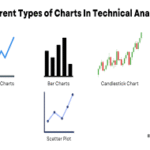
- Technical analysis: charts, patterns, indicators
- Fundamental analysis: earnings, valuation, balance sheets
Neither guarantees success. Used together, they provide context—not certainty.
9. Costs Still Matter—Even When Commissions Are Free
Hidden costs include:
- Bid–ask spreads
- Slippage
- Taxes
- Opportunity cost
Frequent trading increases friction and reduces net returns.
10. The Psychology of Online Stock Trading
Online environments intensify behavioral biases:
- Fear of missing out (FOMO)
- Overconfidence after wins
- Loss aversion after drawdowns
Successful traders design systems to protect themselves from themselves.
11. Who Should Consider Online Stock Trading?
Online stock trading may be appropriate for:
- Individuals with time to study markets
- Those with strict risk controls
- Capital that can tolerate losses
It is not suitable as a primary wealth-building strategy for most people.
12. Common Mistakes New Stock Traders Make
❌ Overtrading due to easy access
❌ Concentrated bets in single stocks
❌ Ignoring risk limits
❌ Treating short-term wins as skill
Most failures are structural, not accidental.
Conclusion: Know What Game You Are Playing
Online stock trading offers opportunity—but also significant risk.
For CEOs, founders, and serious individuals, the key is clarity:
- Understand the difference between trading and investing
- Control risk before seeking returns
- Avoid emotional decision-making
- Measure success over meaningful timeframes
Online stock trading is not inherently good or bad. Its outcomes depend entirely on discipline, structure, and self-awareness.
Know the rules. Respect the risk. Trade responsibly.
Word Count:
500
Summary:
Online stock trading is the simplest and easiest method of buying and selling shares, and it can be done entirely from the comfort of your own home or office. Find out more on the intricacies of online stock trading in the following article.
Keywords:
online stock trading, online trading, stock trading
Article Body:
Online stock trading is the simplest and easiest method of buying and selling shares, and it can be done entirely from the comfort of your own home or office. One of the main reasons that online stock trading has become so popular is because investors are not required to pay hefty commission fees to brokers, which would take away from their net return. Most brokers offer a so-called �flat fee,� which means that you pay a very low cost (around $10) for buying and selling any stock, regardless of the amount of shares you are trading.
Online stock trading is enabling millions of Americans to make money in the stock market � even with minimal investments. Big companies like Charles Schwab, e-Trade, TD Waterhouse, and Ameritrade all cater to these kinds of traders with low commissions and easy-to-use trading platforms. As a result, online trading is becoming a very popular alternative to more traditional methods of stock investing. Luckily for everyone interested in the industry, online stock trading is a pretty simple thing to get into.
However, before you dive in headfirst, you need to understand that stock trading is a business � it�s done to make money � and it�s definitely not a get rich quick scheme. If managed properly, stock trading is a legitimate means of attaining financial freedom. Always remember that day trading and investing in stocks involves high risks, and losing a lot of money IS a possibility. In other words, stock trading is not for the inexperienced, or the na�ve � it should not be entered into lightly.
As with any type business venture, you need to define your stock trading goals before you actually begin to trade. So, you need to do some solid planning. A good trading plan covers topics like:
- How many trades will you take per month/day/week?
- How much risk should be taken per trade?
- Which system or set of indicators will you use to find the right stocks to trade?
It is very important that you take stock trading seriously. It is a business, so educate yourself, prepare your funds, plan carefully, and then execute your plan. This will set you far apart from the gamblers out there who want to get rich quick. There�s a saying about stock traders that says it all: �a stock trader who wishes to make his million in one day will be hung in one week.� If you put just a little forethought into your trading plan, you can avoid these mistakes.
Successful stock trading, like so many other things in life, requires you to have skill, discipline, and a good plan. It is not for everyone. However, if you are serious about getting into online stock trading and you�re willing to give all your effort to be successful, then welcome! I wish you all the best in your trading!

Tinggalkan Balasan